
Introduction
Distance learning programs have changed the way people study, earn degrees, and improve their skills. In the past, education required physical attendance in classrooms. Today, students can learn from home, from another city, or even from another country. This flexibility has made education more accessible than ever before.
Distance learning programs allow students to attend classes online, access study materials digitally, and interact with teachers through virtual platforms. Whether someone wants to earn a college degree, complete a certification, or upgrade professional skills, these programs provide practical solutions.
Moreover, distance learning programs are suitable for working professionals, stay-at-home parents, and students who cannot attend traditional classes. They offer structured courses, assignments, exams, and support systems similar to campus-based education.
In this guide, you will learn everything about distance learning programs. We will explore how they work, their benefits and risks, step-by-step enrollment guidance, common mistakes, and expert tips. By the end, you will clearly understand whether this learning method is right for you and how to succeed in it.
What is Distance Learning Programs?
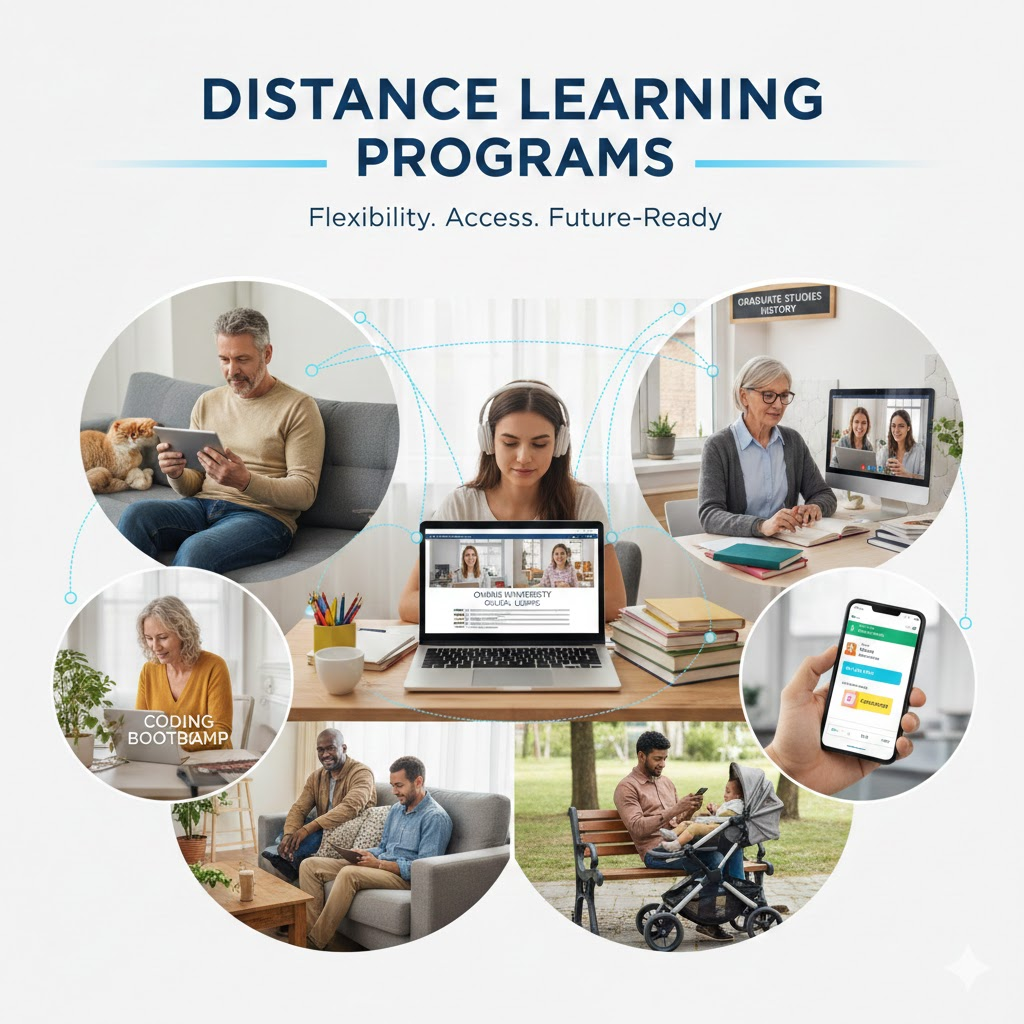
Distance learning programs are educational courses delivered remotely using digital platforms. Students do not need to physically attend a classroom. Instead, they access lessons through video lectures, online portals, live classes, and digital resources.
These programs can include:
- Online degree programs
- Diploma courses
- Professional certifications
- Skill-based training
- Corporate learning modules
Distance learning programs may be synchronous or asynchronous.
Synchronous learning means students attend live classes at scheduled times. They can interact with instructors and classmates in real time.
Asynchronous learning allows students to study at their own pace. They can watch recorded lectures, complete assignments, and submit tasks according to deadlines.
Many universities and institutions now offer fully online degrees. Some combine online study with occasional campus visits, known as blended learning.
Overall, distance learning programs provide structured education without requiring daily physical attendance.
Why is Distance Learning Programs Important?
Distance learning programs are important because they remove traditional barriers to education.
First, they increase accessibility. Students living in rural areas or different countries can access quality education from top institutions.
Second, they offer flexibility. Many people work full-time jobs and cannot attend regular classes. Online programs allow them to study during evenings or weekends.
Third, they reduce costs. Students save money on transportation, accommodation, and campus-related expenses.
Additionally, distance learning programs support lifelong learning. Professionals can upgrade skills without quitting their jobs. For example, a marketing executive can enroll in a digital marketing certification while continuing work.
Furthermore, technology has improved significantly. Interactive platforms, discussion forums, and video conferencing tools create engaging learning environments.
In today’s fast-changing world, continuous education is essential. Therefore, distance learning programs play a key role in career growth and personal development.
Detailed Step-by-Step Guide
Step 1: Identify Your Goal
Before enrolling in distance learning programs, clearly define your objective.
Ask yourself:
- Do I want a degree?
- Do I need a certification for promotion?
- Am I learning for personal interest?
For example, if you want to switch careers, choose a program aligned with your target field.
Step 2: Research Accredited Institutions
Accreditation is extremely important. Always choose recognized institutions.
Check:
- Institutional accreditation status
- Course curriculum
- Faculty qualifications
- Student reviews
Accredited distance learning programs ensure your degree or certificate has value in the job market.
Step 3: Compare Course Structure
Every program has a different format.
Look at:
- Duration
- Study hours per week
- Live vs recorded sessions
- Assessment methods
Some distance learning programs require weekly live attendance, while others allow complete flexibility.
Step 4: Understand Costs and Financial Options
Calculate total expenses, including:
- Tuition fees
- Exam fees
- Technology costs
- Study materials
Many institutions offer installment plans or scholarships.
Step 5: Check Technical Requirements
You need:
- A reliable internet connection
- A laptop or desktop
- Updated software
- Quiet study space
Without proper technical setup, distance learning programs can become challenging.
Step 6: Apply and Submit Documents
Application usually involves:
- Online form submission
- Academic transcripts
- Identification documents
- Application fee
Make sure you meet eligibility criteria before applying.
Step 7: Create a Study Plan
Time management is crucial.
Create a weekly schedule. Dedicate specific hours to:
- Watching lectures
- Completing assignments
- Reviewing notes
Consistency ensures success in distance learning programs.
Step 8: Participate Actively
Engage in:
- Discussion forums
- Group projects
- Live sessions
Active participation improves understanding and networking.
Step 9: Complete Assignments on Time
Online programs require discipline. Always track deadlines and submit work before due dates.
Step 10: Prepare for Exams
Some programs conduct:
- Online exams
- Proctored tests
- Project-based evaluations
Understand the format and prepare accordingly.
Benefits of Distance Learning Programs
Distance learning programs offer multiple advantages:
- Flexible schedule for working professionals
- Access to global universities
- Lower transportation and living costs
- Opportunity to balance family and study
- Self-paced learning options
- Wide variety of courses
- Improved digital skills
- Comfortable learning environment
- Career advancement opportunities
- Networking with international peers
These benefits make online education attractive to modern learners.
Disadvantages / Risks
Despite advantages, distance learning programs have some challenges:
- Limited face-to-face interaction
- Requires strong self-discipline
- Possible technical issues
- Risk of enrolling in unaccredited institutions
- Feeling isolated
- Time zone differences in live classes
- Less hands-on practical experience in some fields
Understanding these risks helps students prepare better.
Common Mistakes to Avoid
Many students struggle because they make avoidable mistakes.
- Choosing programs without checking accreditation
- Underestimating time commitment
- Ignoring participation in discussions
- Procrastinating assignments
- Not creating a proper study schedule
- Using unreliable internet connections
- Multitasking during lectures
Avoiding these mistakes improves your chances of success in distance learning programs.
FAQs
1. Are distance learning programs recognized?
Yes, if offered by accredited institutions. Always verify accreditation before enrolling.
2. Can I get a full degree online?
Yes. Many universities offer complete undergraduate and postgraduate degrees through distance learning programs.
3. Are online degrees valued by employers?
Employers value degrees from reputable institutions. Skills and performance matter more than learning mode.
4. How many hours should I study weekly?
It depends on the program. Typically, 10–20 hours per week is required for part-time study.
5. Do I need advanced technical skills?
Basic computer skills are usually enough. Most platforms are user-friendly.
6. Can I work while studying?
Yes. Flexibility is one of the biggest advantages of distance learning programs.
7. Are exams conducted online?
Many programs use online exams with monitoring software. Some require in-person testing centers.
8. What if I miss a live session?
Most institutions provide recorded lectures for later viewing.
Expert Tips & Bonus Points
To succeed in distance learning programs, follow these expert strategies:
- Set clear short-term and long-term goals
- Create a distraction-free study space
- Use digital tools like planners and reminders
- Take regular breaks to avoid burnout
- Join study groups for motivation
- Communicate with instructors when confused
- Keep backups of assignments
- Stay consistent even during busy weeks
Additionally, treat online study like a real classroom. Dress comfortably but professionally during live sessions. Maintain focus and avoid social media distractions.
Another helpful tip is to track your progress weekly. Review completed modules and identify weak areas.
Networking is also important. Connect with classmates through forums or professional platforms. These relationships can help in future career opportunities.
Finally, celebrate small achievements. Completing modules or passing exams deserves recognition.
Conclusion
Distance learning programs have transformed modern education. They provide flexibility, accessibility, and opportunities for millions of learners worldwide. Whether you are a beginner looking to start higher education or a professional aiming to upgrade skills, these programs offer practical solutions.
However, success in distance learning programs requires discipline, planning, and active participation. Choosing an accredited institution, creating a study schedule, and staying consistent are essential steps.
While challenges like limited interaction and technical issues exist, proper preparation can reduce these risks. The key is to remain focused and committed to your goals.
In today’s digital world, education no longer depends on physical classrooms. With the right mindset and strategy, distance learning programs can open doors to new careers, higher salaries, and personal growth.