Introduction
In today’s fast-changing world, learning never stops. Whether you are a student, working professional, freelancer, or business owner, upgrading your skills is no longer optional. This is where the best online courses make a real difference. They allow you to learn from anywhere, at any time, and often at a lower cost than traditional education.
The demand for flexible learning has increased rapidly. Many people now prefer the best online courses because they fit easily into busy schedules. You can study at night, during weekends, or even during a lunch break. More importantly, these courses help you gain practical skills that employers actually want.
From digital marketing and coding to graphic design and business management, there are thousands of options available. However, choosing the best online courses can feel overwhelming. With so many platforms, instructors, and subjects, how do you know which one is right for you?
This complete guide will help you understand everything about the best online courses. You will learn what they are, why they matter, how to choose the right one, and how to avoid common mistakes. By the end of this article, you will feel confident in selecting a course that supports your personal and professional goals.
What is Best Online Courses?
The term “best online courses” refers to high-quality digital learning programs that are delivered through the internet. These courses are designed to teach specific skills or knowledge areas in a structured way.
Unlike traditional classroom learning, online courses are accessible through laptops, tablets, or smartphones. Most include video lectures, reading materials, quizzes, assignments, and sometimes live sessions.
The best online courses usually have the following features:
- Clear learning objectives
- Well-structured modules
- Experienced instructors
- Practical assignments
- Certificates upon completion
- Positive student reviews
Online learning platforms host thousands of courses in different categories such as:
- Programming and IT
- Business and entrepreneurship
- Marketing and sales
- Personal development
- Design and creativity
- Health and fitness
Some courses are short and can be completed in a few hours. Others are detailed programs that take weeks or months. The best online courses are not just about theory. They focus on real-world application, helping learners gain practical skills that can be used immediately.
In simple words, the best online courses combine flexibility, quality, and affordability to create a powerful learning experience.
Why is Best Online Courses Important?
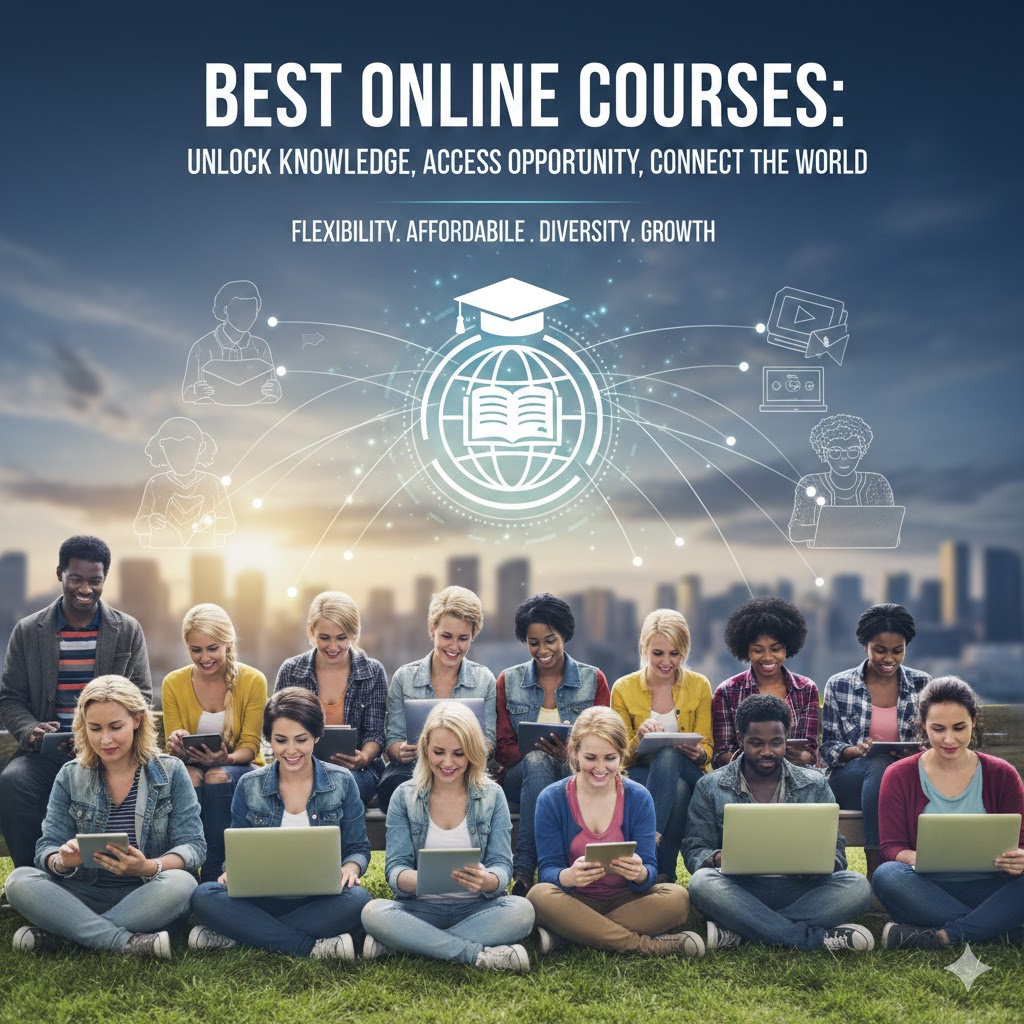
Online education has changed how people learn. The importance of the best online courses is growing every year for several reasons.
First, they provide flexibility. Many people cannot attend traditional classes due to work or family responsibilities. Online learning solves this problem by allowing self-paced study.
Second, they are cost-effective. Compared to university degrees or offline training programs, the best online courses are usually more affordable. Some are even free.
Third, they offer global access. You can learn from top instructors and industry experts without traveling to another city or country.
Fourth, they support career growth. Employers now value practical skills. Completing the best online courses shows initiative, discipline, and commitment to improvement.
Finally, online courses help in skill diversification. For example, a marketing professional can learn basic coding. A student can explore graphic design. This flexibility opens new career paths.
Because of these advantages, more people are turning to the best online courses to stay competitive in the job market.
Detailed Step-by-Step Guide
Step 1: Identify Your Goal
Before choosing from the best online courses, ask yourself what you want to achieve.
- Do you want a promotion?
- Do you want to switch careers?
- Do you want to start freelancing?
- Do you want to learn a hobby?
Having a clear goal makes it easier to select the right course.
Step 2: Choose the Right Subject
Once your goal is clear, choose a subject that supports it. For example:
- If you want to become a web developer, look for coding courses.
- If you want to start an online business, search for digital marketing courses.
- If you want to improve communication, choose public speaking or soft skills training.
The best online courses are those that align with your long-term plan.
Step 3: Research the Platform

Not all platforms are equal. Check:
- Platform reputation
- Instructor background
- Student reviews
- Course ratings
- Completion rate
Reliable platforms usually provide detailed course outlines and preview lessons.
Step 4: Check Course Content
Carefully read the course description. Make sure it includes:
- Clear learning outcomes
- Updated content
- Practical projects
- Real-life examples
The best online courses focus on both theory and practice.
Step 5: Compare Pricing
Some courses are free, while others are paid. Higher price does not always mean better quality.
Look for:
- Discounts
- Refund policies
- Subscription plans
Choose a course that fits your budget without compromising quality.
Step 6: Look for Certification
Certificates can improve your resume and LinkedIn profile. While not all employers require certificates, they show proof of learning.
The best online courses usually provide shareable certificates after completion.
Step 7: Commit to a Schedule
After enrollment, create a study plan.
- Set weekly goals
- Allocate fixed study hours
- Avoid distractions
Consistency is key to completing any course successfully.
Benefits of Best Online Courses
The best online courses offer many advantages. Here are some major benefits:
- Flexible learning schedule
- Affordable compared to traditional education
- Wide range of subjects
- Access to global instructors
- Skill-based practical training
- Opportunity to learn at your own pace
- Certificates to enhance your resume
- No travel or relocation required
- Lifetime access in many cases
- Updated industry-relevant content
These benefits make online learning attractive for students, professionals, and entrepreneurs.
Disadvantages / Risks
Although the best online courses offer many benefits, there are some drawbacks:
- Lack of face-to-face interaction
- Self-discipline required
- Risk of low-quality courses
- Technical issues like internet problems
- Overwhelming number of options
- Limited networking compared to offline classes
Understanding these risks helps you prepare better and choose wisely.
Common Mistakes to Avoid
Many learners make avoidable mistakes when selecting or completing online courses.
One common mistake is choosing a course only because it is popular. A course may be trending but not suitable for your goals.
Another mistake is enrolling in too many courses at once. This often leads to incomplete programs and wasted money.
Some learners skip reviews. Reading feedback from previous students can save you from low-quality courses.
Ignoring practical assignments is another error. The best online courses include projects for a reason. They help you apply knowledge.
Finally, many people do not practice what they learn. Knowledge without action brings little value. Always apply new skills in real-life situations.
Avoiding these mistakes increases your chances of success.
FAQs
1. Are online courses worth it?
Yes, online courses are worth it if you choose the right one and complete it seriously. The best online courses provide practical skills that improve career opportunities and earning potential.
2. How do I know if a course is high quality?
Check instructor experience, course reviews, ratings, and content outline. High-quality courses usually include updated material and real-world projects.
3. Can online courses replace a university degree?
Online courses cannot fully replace a formal degree in all fields. However, they are excellent for skill development and career advancement, especially in technology and business sectors.
4. How long does it take to complete an online course?
It depends on the course length. Some courses take a few hours, while others take several weeks or months. Self-paced learning allows flexibility.
5. Do employers accept online certificates?
Many employers accept certificates from reputable platforms, especially if the course teaches relevant practical skills.
6. What are the most popular subjects in online learning?
Popular subjects include programming, digital marketing, graphic design, data analysis, business management, and personal development.
Expert Tips & Bonus Points
If you want to get the most from the best online courses, follow these expert tips.
First, treat your online course like a real classroom. Set deadlines and hold yourself accountable.
Second, take notes while watching lectures. Writing key points improves memory and understanding.
Third, join discussion forums if available. Interacting with other learners increases knowledge and motivation.
Fourth, build a portfolio. For example, if you complete a design course, create sample projects. If you finish a coding course, develop a small website or app.
Fifth, update your resume and professional profiles after completing a course. Mention specific skills learned.
Sixth, focus on quality over quantity. Completing one detailed course is better than enrolling in five unfinished ones.
Lastly, continue learning. The job market changes quickly. Regularly upgrading your skills keeps you competitive.
Conclusion
Education is no longer limited to classrooms and textbooks. The best online courses have made high-quality learning accessible to everyone with an internet connection. Whether you want to change careers, improve your current job performance, or explore a new interest, online courses provide a practical solution.
They offer flexibility, affordability, and global access. At the same time, they require discipline and careful selection. By identifying your goals, researching platforms, reviewing course content, and committing to a schedule, you can maximize the benefits of online learning.
Remember, the best online courses are not just about collecting certificates. They are about building real skills and applying them in daily life. When chosen wisely and completed seriously, they can open doors to new opportunities and long-term success.