

Introduction
In today’s fast-changing world, having the right technical knowledge is not enough. To grow in your career, you need strong professional development skills that help you adapt, improve, and stand out. Whether you are a student, a beginner employee, or someone with experience, developing these skills can completely transform your career path.
Professional development skills include communication, leadership, time management, problem-solving, and emotional intelligence. These skills help you perform better at work, build strong relationships, and achieve long-term success. Without continuous growth, it becomes difficult to compete in today’s job market.
Many people think professional growth only happens through promotions or higher salaries. However, real growth comes from learning, improving, and becoming more confident in your abilities. When you invest in professional development skills, you invest in your future.
In this guide, you will learn what professional development skills are, why they matter, how to build them step by step, and how to avoid common mistakes. By the end of this article, you will clearly understand how to improve yourself professionally and move forward with confidence.
What is Professional Development Skills?
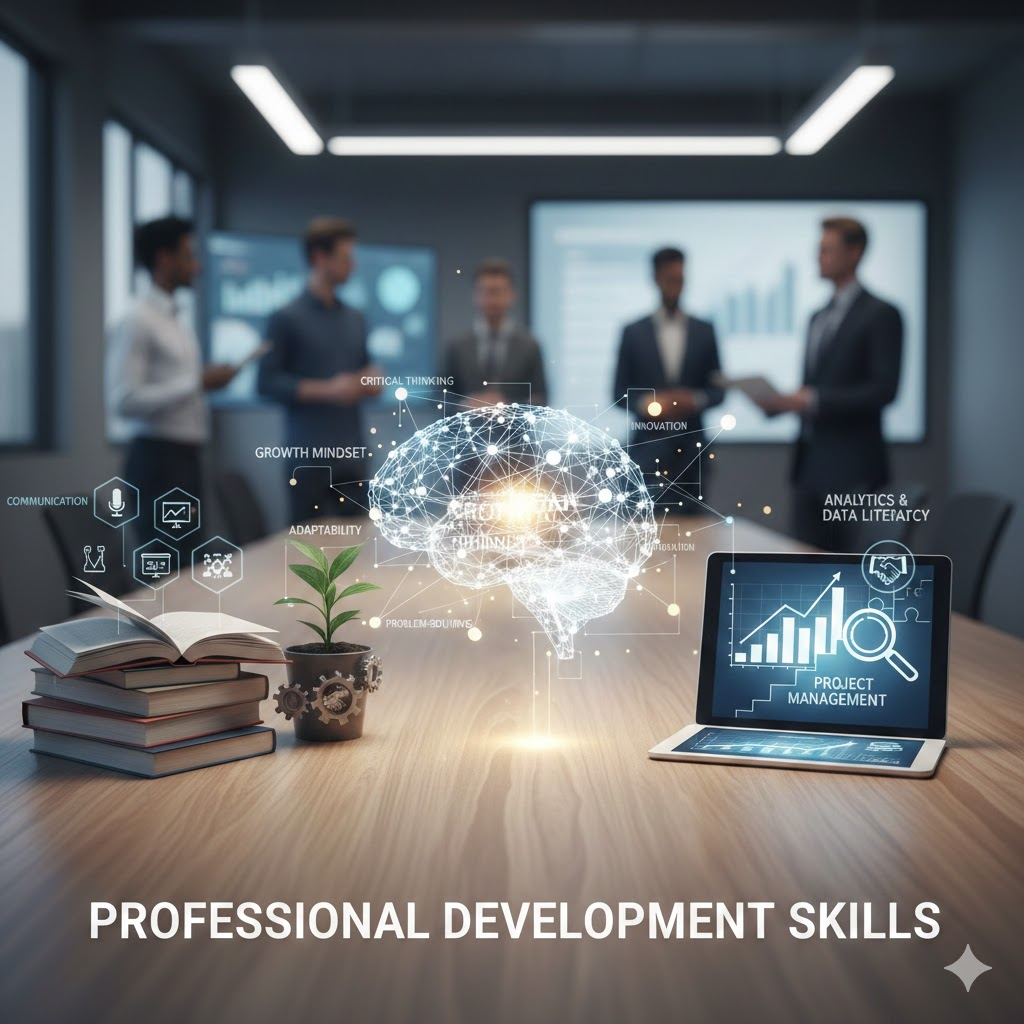
Professional development skills are abilities that help you grow in your career and improve your performance at work. These skills go beyond technical knowledge. They focus on how you communicate, manage your time, solve problems, and work with others.
In simple words, professional development skills help you become better at your job and prepare you for bigger responsibilities. They support both personal growth and career advancement.
These skills can include:
- Communication skills
- Leadership abilities
- Time management
- Critical thinking
- Teamwork
- Adaptability
- Emotional intelligence
- Networking skills
For example, imagine two employees with the same technical knowledge. The one who communicates clearly, manages time properly, and solves problems calmly will likely grow faster. That is the power of professional development skills.
They are not learned in one day. Instead, they improve through practice, feedback, and continuous learning.
Why is Professional Development Skills Important?
Professional development skills are important because they help you stay relevant in a competitive job market. Companies prefer employees who are not only skilled but also adaptable and responsible.
Here are some reasons why these skills matter:
1. Career Growth
When you improve your professional development skills, you become ready for promotions and leadership roles. Managers look for people who can handle pressure and guide others.
2. Better Job Performance
Strong skills like time management and communication improve daily performance. You complete tasks on time and avoid misunderstandings.
3. Increased Confidence
As you develop new abilities, your confidence increases. You feel more comfortable speaking in meetings or taking on new challenges.
4. Job Security
Employees who continuously improve are more valuable to companies. This makes them less likely to be replaced.
5. Personal Satisfaction
Growth brings satisfaction. Learning new skills makes work more meaningful and less stressful.
Without professional development skills, career progress often becomes slow. Therefore, investing time in self-improvement is essential.
Detailed Step-by-Step Guide to Building Professional Development Skills
Improving professional development skills requires a clear plan. Below is a simple step-by-step guide to help you grow steadily.
Step 1: Assess Your Current Skills
Start by understanding where you stand.
- Identify your strengths
- Recognize your weaknesses
- Ask for feedback from colleagues or supervisors
- Reflect on past mistakes
For example, if you struggle with public speaking, that becomes an area to improve.
Step 2: Set Clear Career Goals
Without goals, growth becomes directionless.
Ask yourself:
- Where do I see myself in five years?
- What position do I want?
- What skills are required for that role?
Write down specific goals such as improving leadership skills or learning advanced communication techniques.
Step 3: Create a Learning Plan
Once you know your goals, create a plan.
You can:
- Take online courses
- Attend workshops
- Read books
- Watch educational videos
- Join professional communities
Make learning part of your weekly routine.
Step 4: Improve Communication Skills
Communication is one of the most important professional development skills.
To improve:
- Practice active listening
- Speak clearly and confidently
- Improve writing skills
- Avoid unnecessary arguments
- Learn to give and receive feedback
For example, during meetings, focus fully on the speaker instead of thinking about your response.
Step 5: Strengthen Time Management
Good time management increases productivity.
You can:
- Use a daily planner
- Prioritize important tasks
- Avoid multitasking
- Set deadlines
- Take short breaks
When you manage time properly, stress reduces and efficiency increases.
Step 6: Develop Leadership Abilities
Leadership is not limited to managers.
You can show leadership by:
- Taking responsibility
- Supporting teammates
- Solving problems calmly
- Staying positive during challenges
Even small actions, like guiding a new employee, build leadership skills.
Step 7: Build Emotional Intelligence
Emotional intelligence helps you understand your emotions and others’ feelings.
To develop it:
- Stay calm under pressure
- Avoid reacting impulsively
- Practice empathy
- Respect different opinions
This improves workplace relationships.
Step 8: Practice Problem-Solving Skills
Employers value employees who can solve problems independently.
To improve:
- Analyze situations carefully
- Think of multiple solutions
- Evaluate risks
- Make decisions confidently
Instead of complaining about issues, focus on solutions.
Step 9: Seek Feedback and Improve
Feedback is powerful.
- Ask supervisors for suggestions
- Accept criticism positively
- Make improvements consistently
Continuous improvement strengthens professional development skills over time.
Step 10: Build a Strong Network
Networking opens new opportunities.
- Attend professional events
- Connect with industry experts
- Maintain good relationships
- Stay active on professional platforms
Strong networks support long-term career growth.
Benefits of Professional Development Skills
Developing professional development skills offers many advantages:
- Increased career opportunities
- Higher chances of promotion
- Better workplace relationships
- Improved productivity
- Greater job satisfaction
- Stronger leadership potential
- Enhanced confidence
- Better decision-making abilities
- Increased adaptability to change
- Improved work-life balance
These benefits show why investing in skill development is worthwhile.
Disadvantages / Risks
Although professional development skills are beneficial, there can be some challenges:
- Time investment required
- Financial cost for courses or training
- Temporary discomfort while learning new skills
- Fear of failure
- Overcommitment leading to burnout
However, these risks are manageable with proper planning and balance.
Common Mistakes to Avoid
Many people try to improve but make avoidable mistakes.
1. Ignoring Feedback
Refusing feedback slows growth.
2. Setting Unrealistic Goals
Trying to master everything at once leads to frustration.
3. Avoiding Challenges
Growth happens outside your comfort zone.
4. Inconsistency
Learning once and stopping does not bring results.
5. Focusing Only on Technical Skills
Professional development skills are equally important as technical abilities.
Avoiding these mistakes ensures steady improvement.
FAQs
1. What are the most important professional development skills?
Communication, time management, leadership, adaptability, and problem-solving are among the most important. These skills directly impact career success.
2. How long does it take to develop professional skills?
There is no fixed timeline. It depends on effort and consistency. Small improvements can be seen within months.
3. Can professional development skills be learned at any age?
Yes. Learning and growth are lifelong processes. Age does not limit skill improvement.
4. Are professional development skills different from technical skills?
Yes. Technical skills relate to specific tasks, while professional development skills focus on behavior, communication, and growth.
5. How can beginners start improving?
Beginners can start by setting goals, reading books, taking online courses, and asking for feedback.
6. Do employers value professional development skills?
Absolutely. Employers often prioritize candidates with strong soft skills and growth potential.
Expert Tips & Bonus Points
To accelerate your progress, consider these expert tips:
- Keep a learning journal to track progress
- Practice public speaking regularly
- Volunteer for challenging projects
- Read at least one professional book per month
- Find a mentor for guidance
- Reflect on daily performance
- Stay updated with industry trends
- Maintain a positive attitude
- Learn from failures
- Celebrate small achievements
Additionally, consistency is key. Even 30 minutes of daily learning can make a big difference over time.
Remember, professional development skills improve gradually. Patience and dedication are essential.
Conclusion
Professional growth does not happen by chance. It requires effort, planning, and continuous learning. Professional development skills are the foundation of long-term career success. They help you communicate better, manage time effectively, solve problems confidently, and lead with integrity.
In today’s competitive world, standing still is not an option. You must keep improving to stay relevant. By assessing your current abilities, setting clear goals, and following a structured learning plan, you can steadily build the skills needed for career advancement.
Although challenges may appear along the way, the benefits of developing professional development skills far outweigh the difficulties. Increased confidence, better opportunities, and personal satisfaction make the journey worthwhile.